
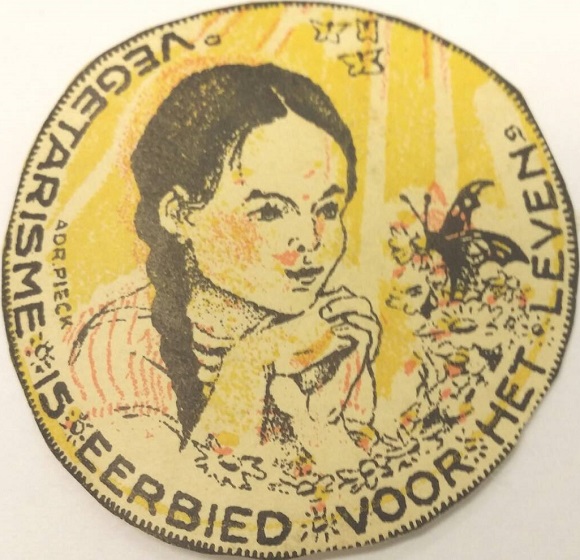
Vegetarisme is eerbied voor het leven.
Vegetarianism is reverence for life.
An item in our Ernest Bell Library –
A cinderella stamp – from the Netherlands by the artist Adrianua Jacoba (‘Adri’) Pieck (1894 – 1982).
38mm diameter – 3 color screen printing – hand cut.
Circa 1920 / 1930 – unused
In philately, a cinderella stamp is “virtually anything resembling a postage stamp, but not issued for postal purposes by a government postal administration
.……
Adri Pieck & Family
The sisters Gretha Pieck (1898-1920) and Adri Pieck (1894-1982) were artists from Maartensdijk, on the other side of the Utrecht Ridge. The region of Eemland, especially Amersfoort and surroundings, was their work area.
They were two of the daughters of teacher, writer and artist Antonie Pieck.
In 1920 Gretha died from the Spanish flu.
Adri painted landscapes, portraits and animal scenes. As a vegetarian she lived frugally and made her work available for good causes such as: –
de anti-vivisectie = anti-vivisection
de anti-trekhondenbond = the anti-draught-dog association (see film below).
and
de dierenbescherming = animal protection societies.
In 1982, a foundation was created from the estate of Adri with the aim of awarding prizes for young artists. Proceeds from the sale of Gretha’s and Adri’s paintings, drawings and designs are added to the foundation – Stichting Gretha en Adri Pieck.
The Gretha and Adri Pieck Prize is an incentive for promising students from a Dutch art academy. The award consists of a cash prize and is awarded annually.
Source
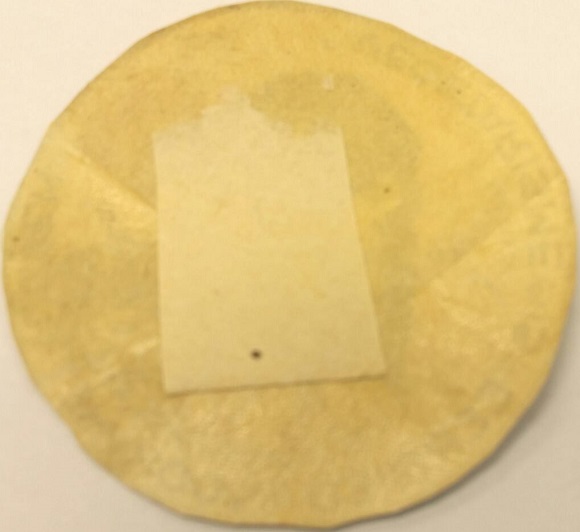
The reverse of the cinderella stamp
……
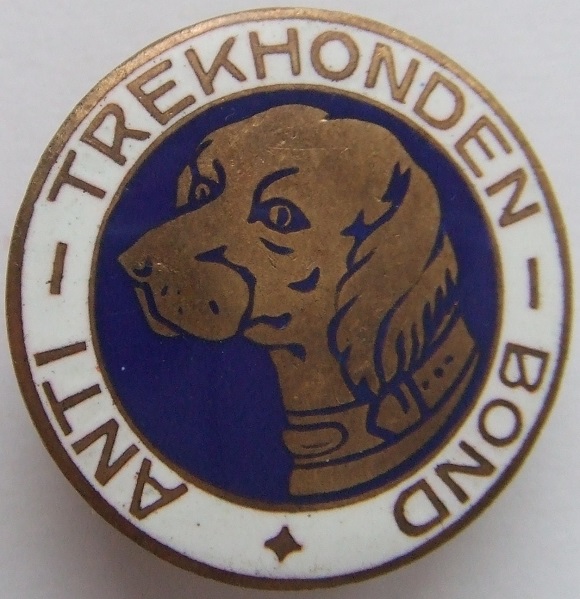
Anti-Trekhondenbond
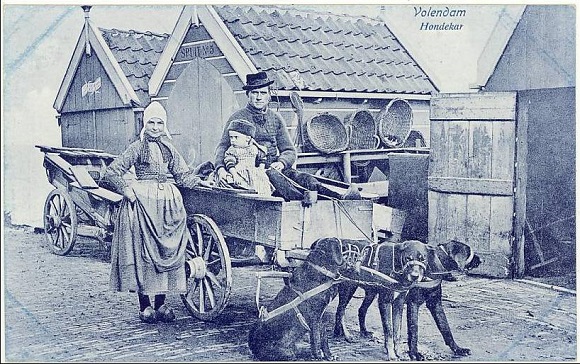
A silent 1928 promotional film for the Anti-Trekhondenbond / anti-draught-dog association. The film shows the mistreatment of draught-dogs. “Domestic and foreign” journalists gather at the American Hotel in Amsterdam, and then travel to Amersfoort and Hattem, where the cruel treatment of the draught-dogs is shown. Finally, a visit is paid to the estate called “De Dreef”, where the dogs are pampered. The film closes with the titles: “Join the anti-draught-dog association. The minimum contribution is 1 guilder per year”, and “Visit our stand at this fair, stand number 41”.

Source – a .pdf file.
Royal Dog Protection – Netherlands – here.
Source
……
Our Projects
The Henry Salt Archive is one of our, almost completed, projects.
The Humanitarian League is our Hong Kong registered charity. It cares for The Ernest Bell Library, which was conceived in 1934.
The library is still strong & very active eighty years later – its primary objectives are to: –
Collect all of Ernest Bell’s book & non-book works and make them easily accessible to everyone.
Collect the literature of vegetarianism and all the other humanitarian movements in which Ernest Bell was so deeply involved.
Assist students and scholars in their research.
Introduce all aspects of Ernest Bell’s life, including his writings, campaign work, influences and his circle of friends.
Undertake our own research into missing aspects of Ernest Bell’s life and work.
We already have more than 300 pieces of Ernest Bell’s own writings.
We are also actively building a collection of examples of promotional material, campaign material, fundraising & marketing activities etc. – related to: –
Veg(etari)an products.
Veg(etari)an books & other publications.
Veg(etari)an organisations.
Veg(etari)an businesses.
Animal rights organisations.
Animal rights publications.
Humanitarian organisations.
Humanitarian publications.
Rambling clubs run by members of the above groups & related publications.
The work of Richard St. Barbe Baker & the ‘Men of the Trees’ organization & its many sub-branches.
The history of Democratic Socialism.
Pre-WW2 Trade Union badges / pins / ephemera.
There are currently more than 2,000 items in the Ernest Bell Library. We will complete the cataloging of the collection as & when adequate funds are available.
“I have little doubt that the proposal for the establishment of an Ernest Bell Library, which would specialize in humanitarian and progressive literature, and so form a sort of centre for students, will meet with a wide response.”
Henry S. Salt – writing in September 1934
……
If anyone would like more information about our projects, please send an email to: –
humanitarianleague (at) outlook (dot) com
– or message me through HappyCow –
https://www.happycow.net/blog/author/JohnnySensible/
……
“A people without a history is like a tree without roots.”
April / May 2007 – Satya
Q) Colleen Patrick-Goudreau – You use the phrase “historical amnesia” to refer to the fact that contemporary animal activists—and society as a whole—know nothing of the legacy of animal activism in the U.S. What are some of the effects of having “historical amnesia”? Why is it so important to know our legacy?
A) Diane Beers – Animal advocacy has an amazing history, yet it is essentially an untold story. African American activists will often say, “A people without a history is like a tree without roots.” Indeed, if activists don’t know the history of their cause, they can have no sense of their movement’s struggles, long-term strategies, achievements and heroes. In addition, they can’t promote their long impressive movement to the public, and their opponents—the meat industry, medical research industry and the government—will fill the void. They have been the ones most aggressively and successfully constructing negative images and outright myths of animal advocacy that the public often believes.
……


No Comments